Many teachers take on side hustles because pay varies widely by location, grade, and subject. About 1 in 6 US teachers work second jobs. However, these opportunities demand realistic expectations: most require upfront time and effort, face competition, and offer no guaranteed income.
How Common Are Second Jobs Among Teachers?
Approximately 1 in 6 US teachers hold second jobs, according to Pew Research Center data referenced by Intuit Academy. Median annual wages for teaching roles in 2024 ranged from $59,950 for adult basic and ESL teachers to $83,980 for postsecondary teachers, with elementary, middle, and high school roles falling between $62,000 and $65,000. These figures come from the US Bureau of Labor Statistics and vary significantly by location, experience, and specialization.
The data shows that second jobs are prevalent but not universal. Teachers often seek extra income due to these salary ranges and regional cost-of-living differences. The evidence does not suggest that side work is easy or sufficient to close any income gap reliably.
What Side Hustle Options Fit a Teaching Schedule?
Several ideas appear in education-focused sources as potentially compatible with teaching hours. These generally fall into evenings, weekends, or remote formats.
Common options include:
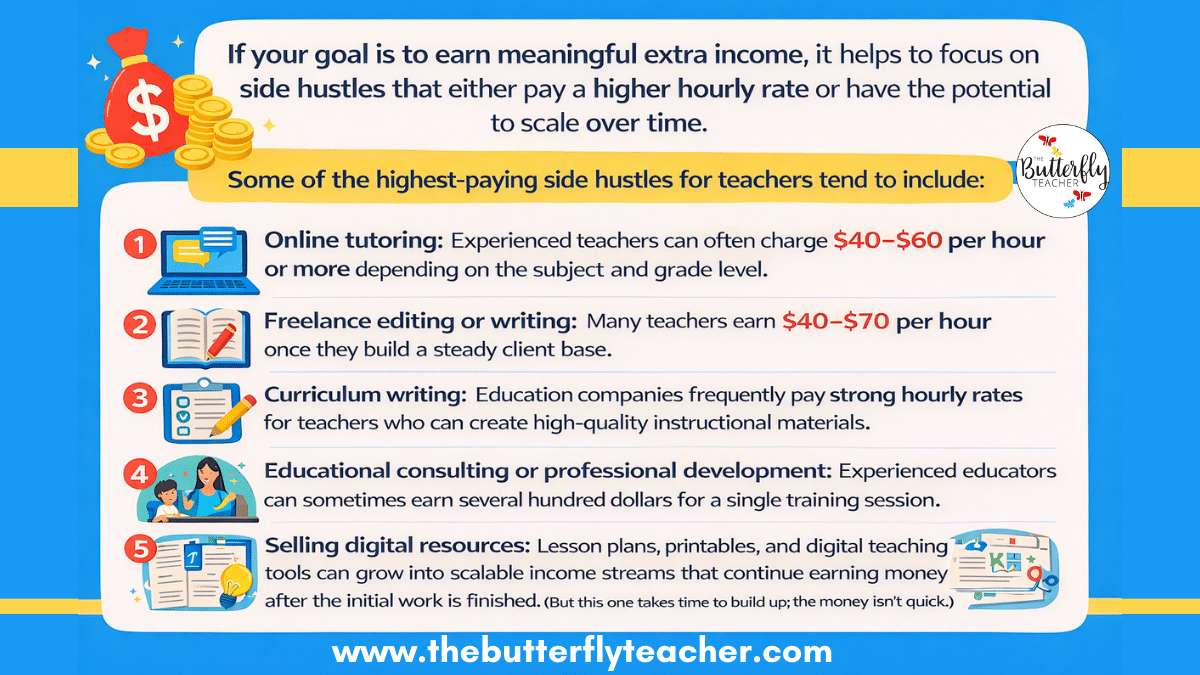
- Online or in-person tutoring and academic coaching
- Creating and selling teacher-created curriculum resources
- Blogging or writing for education websites
- Self-publishing books
- Selling stock photos
- Babysitting or running mini-camps
- Flea market selling
Core teaching skills such as communication and subject expertise transfer well to many of these activities. Tutoring and curriculum creation align most directly with classroom experience.
Online tutoring or academic coaching has estimated hourly rates of $14 to $47, while curriculum or educational content creation ranges from $26 to $61 per hour. These figures from Intuit Academy are based on job board and BLS data. They represent broad estimates only and vary by experience, subject, location, and actual hours worked. No source presents them as typical or guaranteed earnings.
Platforms like Teachers Pay Teachers are frequently mentioned for selling resources, and Kindle Direct Publishing for self-publishing with royalty rates up to 70%. However, these require creating marketable materials and navigating competitive marketplaces. The research provides no data on typical startup time, costs, or success rates.
What Do the Income Estimates Actually Mean?
All cited income ranges are estimates drawn from job boards and government data, not verified typical earnings. Actual results depend on multiple variables including:
- Hours available after teaching duties
- Subject demand and competition
- Marketing and platform fees
- Time spent creating materials before any sales occur
Sources emphasize that side jobs can range from supplemental income to longer-term opportunities, but provide no evidence on net profit after time invested or expenses. Many options, such as creating digital resources or stock photos, involve significant upfront work with uncertain returns. The evidence is limited on how long it takes most teachers to see consistent earnings.
Readers should treat all figures as possible hourly rates only when work is secured, not as reliable weekly or monthly totals.
What Are the Realistic Barriers Teachers Face?
Teaching schedules are demanding, leaving limited time for consistent side work. Many hustles require building an audience, portfolio, or client base before meaningful income appears. Competitive platforms for resources, stock photos, and self-publishing mean most participants earn little.
Evidence gaps are notable: there is limited recent data on actual teacher outcomes, failure rates, or net returns after costs. Sources primarily list ideas rather than document reliable results. This thin evidence means claims about ease or consistency cannot be supported.
Teachers evaluating any opportunity should review terms carefully, calculate realistic time commitments, and remain cautious of any offer promising quick or passive returns. For guidance on judging earning opportunities, see how to evaluate an online program.
Additional realistic perspectives on teacher side work are available in the Intuit Academy guide on side jobs for teachers.
FAQ
Are side hustles a reliable way for teachers to increase their income?
No source describes them as reliable. While about 1 in 6 teachers take second jobs, income estimates are broad ranges only and not guaranteed. Most options require significant upfront effort in competitive markets, with highly variable results. The evidence supports approaching them with caution and realistic expectations rather than counting on steady additional income.
Which teaching skills transfer best to side work?
Communication skills and subject expertise transfer most directly, particularly to tutoring, academic coaching, and creating educational content or curriculum. These align closely with daily teaching responsibilities. Other skills such as organization and presentation may help with blogging, self-publishing, or selling resources, though success still depends on market demand and marketing ability.
How long does it typically take to earn from a teacher side hustle?
Sources provide no clear timeline. Many options, especially creating and selling digital resources, self-publishing, or building a tutoring client base, involve weeks or months of work before first earnings. Competitive platforms and the need to build visibility mean there is no typical or predictable timeframe. Evidence on this question remains limited.