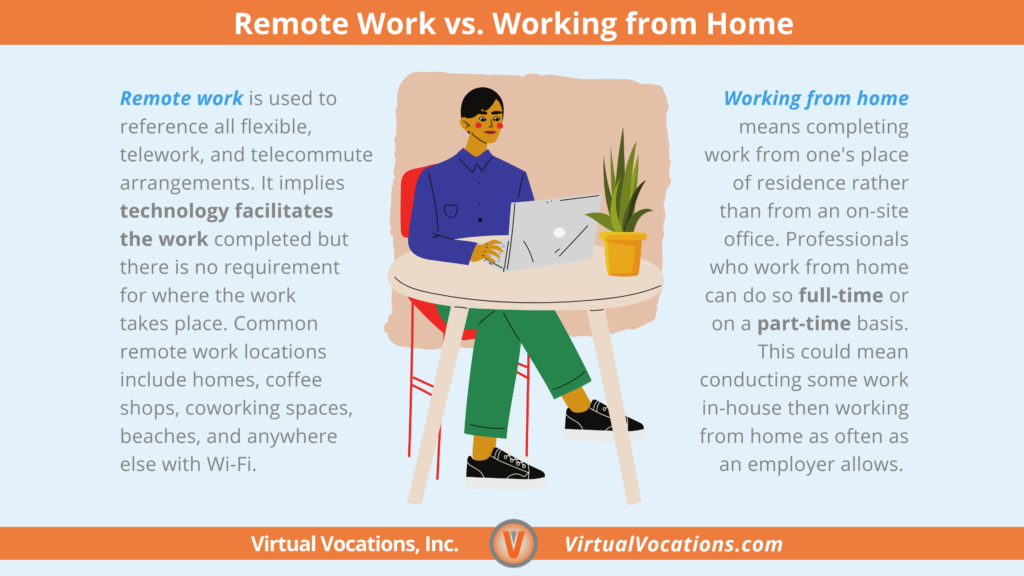
A remote position is a job that allows an employee to perform their duties from a location other than the employer's physical workplace, typically from home or anywhere with reliable internet access. According to the U.S. Office of Personnel Management, remote work means the employee is not expected to report to an agency worksite on a regular and recurring basis.
This arrangement differs from many work-from-home offers promoted online, which sometimes turn out to be scams or paid programs. Remote positions are standard employment with one company, complete with set responsibilities, hours, and usually benefits.
What Is a Remote Position?
The official U.S. government definition states that remote work is a flexible work arrangement in which an employee, under a written remote work agreement, performs work at an alternative worksite. A remote worker's official worksite may be within or outside the local commuting area of an agency worksite. This definition, while written for federal employees, is widely referenced by employers.
In practice, a remote job means the role is performed entirely off-site. The employee does not have a regular requirement to work from the company office. Employers generally provide the job description, performance expectations, and communication methods, while the worker supplies a suitable workspace and reliable internet.
Remote Work vs Work From Home vs Hybrid
The terms are often used interchangeably but have distinct meanings:
- Fully remote means the position is entirely off-site with no regular office requirement.
- Hybrid remote splits time between remote work and in-office days on a scheduled basis.
- Flexible remote (sometimes called work-from-home) typically means the role is primarily office-based with occasional remote days allowed.
- Remote-first means the company operates with remote as the default, though employees may access office space if they choose.
These distinctions matter when reading job postings. A listing that says "remote" but requires occasional office visits is hybrid, not fully remote. Clear written agreements help prevent misunderstandings about expected location and schedule.
Remote Employee vs Freelancer
A remote position refers to an employee role, not freelancing. Remote employees usually have set responsibilities, regular work hours, and benefits with one company. Freelancers work independently on a project basis, often for multiple clients, and are responsible for their own taxes, equipment, and health coverage.
The key difference is employment status. Employees receive a W-2, while independent contractors receive a 1099. Remote employee positions follow company policies and management structures, whereas freelancers set their own rates and schedules but must find their own work continuously.
For those interested in working independently, see how to work for yourself as a beginner freelancer.
Practical Requirements for Remote Roles
Remote positions have several practical requirements that apply across most roles:
- Reliable high-speed internet is essential for video calls, file sharing, and cloud-based tools.
- A quiet workspace that supports focused work and professional communication.
- Basic equipment such as a computer, webcam, headset, and necessary software. Some employers provide equipment, while others expect the employee to have it.
- Strong written and verbal communication skills, since most interaction happens through email, chat, or video.
- Self-motivation and time management, as remote roles are often outcome-focused rather than strictly monitored by physical presence.
Management in remote positions tends to emphasize results over hours spent at a desk. Employees must be comfortable with regular check-ins through digital channels rather than in-person supervision.
Before accepting any online opportunity that requires payment or unusual steps, read how to evaluate an online program.
Common entry-level remote roles mentioned in labor market discussions include SOC analyst, data analyst, and web developer. These typically require specific skills or training, though not always a four-year degree.
Who Remote Positions Suit
Remote positions can suit people who work well independently and have reliable home setups. They often appeal to those seeking to eliminate a daily commute or gain schedule flexibility around family responsibilities.
However, remote work is not ideal for everyone. It can lead to feelings of isolation and weaker connection to company culture. People who need regular in-person interaction or structured supervision may find fully remote arrangements challenging.
Success in remote roles usually depends on:
- Ability to maintain focus without direct oversight
- Comfort with technology and digital communication
- Clear boundaries between work and home life
- Access to a dependable internet connection and suitable workspace
Those exploring remote options should also consider related arrangements. For context on different approaches, see types of remote jobs and realistic hiring timelines.
FAQ
What is the official definition of remote work?
The U.S. Office of Personnel Management defines remote work as a flexible arrangement in which an employee performs duties at an alternative worksite under a written agreement and is not expected to report to an agency worksite regularly. The official worksite can be inside or outside the local commuting area. This definition is widely referenced by private employers as well.
Is a remote position the same as freelancing?
No. A remote position is an employee role with one company, typically including set hours, defined responsibilities, and benefits. Freelancing involves independent contractor work for multiple clients on a project basis, with the freelancer handling their own taxes, insurance, and continuous client acquisition. The employment status and obligations differ significantly.
What is the difference between fully remote and hybrid positions?
Fully remote means no regular requirement to work from the company office. Hybrid positions require a mix of remote days and scheduled in-office days. The exact split is set by the employer and should be clearly stated in the job description or agreement.
Do remote jobs require special equipment?
Most remote positions require reliable high-speed internet, a computer, webcam, and headset. Some employers supply equipment, while others expect employees to provide their own. The specific requirements are listed in the job posting or discussed during hiring. A quiet workspace suitable for professional communication is also necessary.
Who is a good fit for remote positions?
Remote positions suit people who can work independently, manage their time effectively, and maintain focus without direct supervision. They work best for those with a suitable home workspace and reliable internet. Individuals who need frequent in-person collaboration or structured oversight may find hybrid or traditional office roles more suitable.