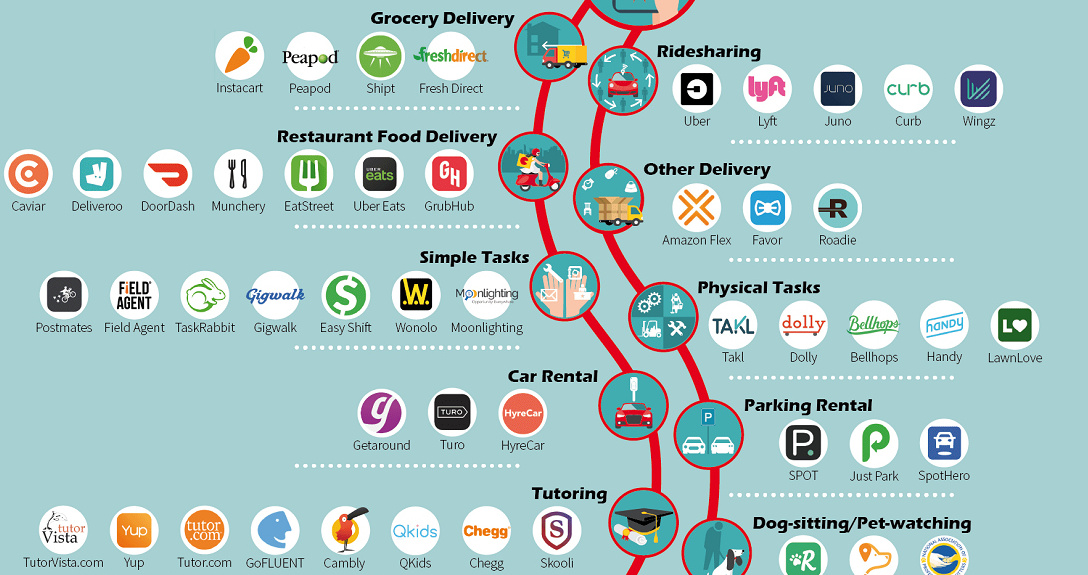
Gig work apps can provide flexible side income through local shifts or delivery, but earnings are not guaranteed and often fall short after expenses. Most people earn $300-$800 per month working part-time, while reaching several thousand dollars typically requires full-time hours for months. Always check current terms and local availability, because requirements, pay, and demand change.
What Are Gig Work Apps?
Gig work apps connect people with temporary tasks, shifts, or delivery jobs. They usually require a background check and let workers choose when to accept work. Some focus on local in-person shifts while others involve driving. The research shows limited evidence of purely laptop-based gig work among major platforms; most require physical labor, a vehicle, or being on location.
These platforms generally do not charge upfront fees to join. However, workers often pay for background checks, gas, vehicle maintenance, and other costs that reduce net pay.
How Do the Main Apps Work?
Several platforms stand out in available sources.
Instawork connects workers to flexible shifts in warehousing, manufacturing, food and beverage, stadiums, events, retail, and cleaning. Workers can choose one-off shifts or longer commitments. The platform vets workers with background checks and ratings. It offers occupational accident insurance and charges no upfront fees. The site claims pay up to $30 per hour, but actual earnings depend on location and demand.
GigSmart matches workers with temporary shifts and some full- or part-time positions in food and beverage, construction, customer service, warehousing, and other fields. Eligible workers receive occupational accident insurance. Temporary work can sometimes convert to permanent employment, and same-day shifts are possible.
Amazon Flex lets drivers deliver packages for Amazon. Drivers set their own schedule by choosing delivery blocks, which are first-come, first-served. The platform reports earnings of $18-$25 per hour, but drivers must supply their own vehicle and pay for gas, parking, and maintenance. A valid driver's license, auto insurance, and a mid-size sedan or larger vehicle are required. Drivers get paid twice a week.
Care.com is a large marketplace connecting caregivers with families for childcare, senior care, pet sitting, house sitting, tutoring, and errands. Caregivers create profiles and may receive direct deposit. The platform notes that pay tends to be relatively low for the care industry. Caregivers pay for the initial background check.
Dolly matches helpers with delivery and moving jobs. Truck owners can earn a minimum of $30 per hour according to the platform. Workers must be 18, pass a background check, and be able to lift 75 pounds. Payment is guaranteed before accepting a job and issued weekly.
DoorDash focuses on food and alcohol delivery. Drivers keep 100% of tips. The platform now guarantees $2 per hour plus tips, with some reports citing averages between $5-$12 per hour. Drivers must pass a background check and are responsible for vehicle wear and tear. The service operates in over 4,000 cities.
Postmates, now part of Uber, delivers food, alcohol, and groceries. Couriers keep 100% of tips. Requirements include being 18 or older with valid ID and Social Security number plus some form of transportation. Pay comes weekly via direct deposit, with occasional bonuses for hitting delivery targets.
What Are the Real Costs and Requirements?
All listed apps require background checks, which may involve a fee paid by the worker. Vehicle-based work carries significant hidden costs: gas, insurance, maintenance, parking, and accelerated vehicle depreciation. These expenses can substantially reduce what workers keep.
For delivery roles like Amazon Flex, DoorDash, and Postmates, workers supply their own car, bike, or scooter and bear all operating costs. Dolly requires the ability to lift 75 pounds and, for higher pay, access to a truck.
Care.com work often needs relevant experience or references, while Instawork and GigSmart shifts may require standing for long periods or specific skills for warehouse or event work. Approval times, success rates for applicants, and exact current pay ranges are not detailed in the available sources.
Payout timing varies. Amazon Flex pays twice weekly. Dolly and Postmates pay weekly. Exact current payout speeds for other apps are not confirmed in the research.
What Should You Consider Before Starting?
Earnings vary enormously by app, city, skill level, hours worked, and market conditions. The sources emphasize that most casual gig workers earn $300-$800 per month. Reaching $3,000-$5,000 per month generally requires working 40 or more hours per week for 60-90 days, though this is not guaranteed and depends on demand.
Unpredictable schedules, last-minute cancellations, and slow periods are common. Vehicle-based gigs can leave workers with low net pay after expenses. People with limited resources or no reliable transportation may find many options unsuitable. Those seeking purely remote laptop work will find few matches among these platforms.
Read each app's current terms directly before signing up, as pay models and requirements change. The Instawork worker page provides official details on shifts and vetting. For general guidance on judging online earning opportunities, see how to evaluate an online program.
Related reading:
- Is Instacart Worth It? Fees and Break-Even Math
- At Home Jobs for Retirees: Realistic Options and Scam Warnings
- Best At-Home Jobs for Seniors With No Experience
FAQ
Are gig work apps a good way to earn money from a laptop?
Most major gig work apps require physical presence for shifts, delivery, or care work rather than purely laptop-based tasks. The available evidence shows thin support for remote-only options among popular platforms. They may suit people who want flexible local hours but are generally not a fit for those limited to home-based computer work. Check each app's requirements and local demand carefully.
How much can you realistically make with gig work apps?
Sources report that most casual gig workers earn between $300 and $800 per month. Higher amounts typically require 40+ hours per week over 60-90 days under favorable conditions. All earnings vary widely by location, time of day, demand, and expenses such as gas and vehicle maintenance. Platforms report certain hourly figures, but these are not guaranteed and do not reflect net pay after costs.
What costs should you expect with gig work apps?
Workers usually pay for background checks. Delivery and moving apps require covering gas, insurance, maintenance, and vehicle wear. These expenses can reduce net earnings significantly. Some platforms offer insurance, but workers remain responsible for their own vehicle and equipment costs. Exact fees and current payout terms should be confirmed on each app's official site.
Do gig work apps charge upfront fees?
The reviewed platforms generally do not charge fees to join or start working. However, background checks may require payment from the worker. Always verify current policies on the official site, as terms can change. No sources indicate hidden joining fees for the listed apps.
Are earnings from gig work apps guaranteed?
No. All sources stress that pay depends on location, demand, hours worked, and other factors. Platform-reported figures are not typical or guaranteed. Vehicle expenses, slow periods, and schedule unpredictability further affect what workers keep. Treat any earnings claims with caution and calculate net pay after real costs.