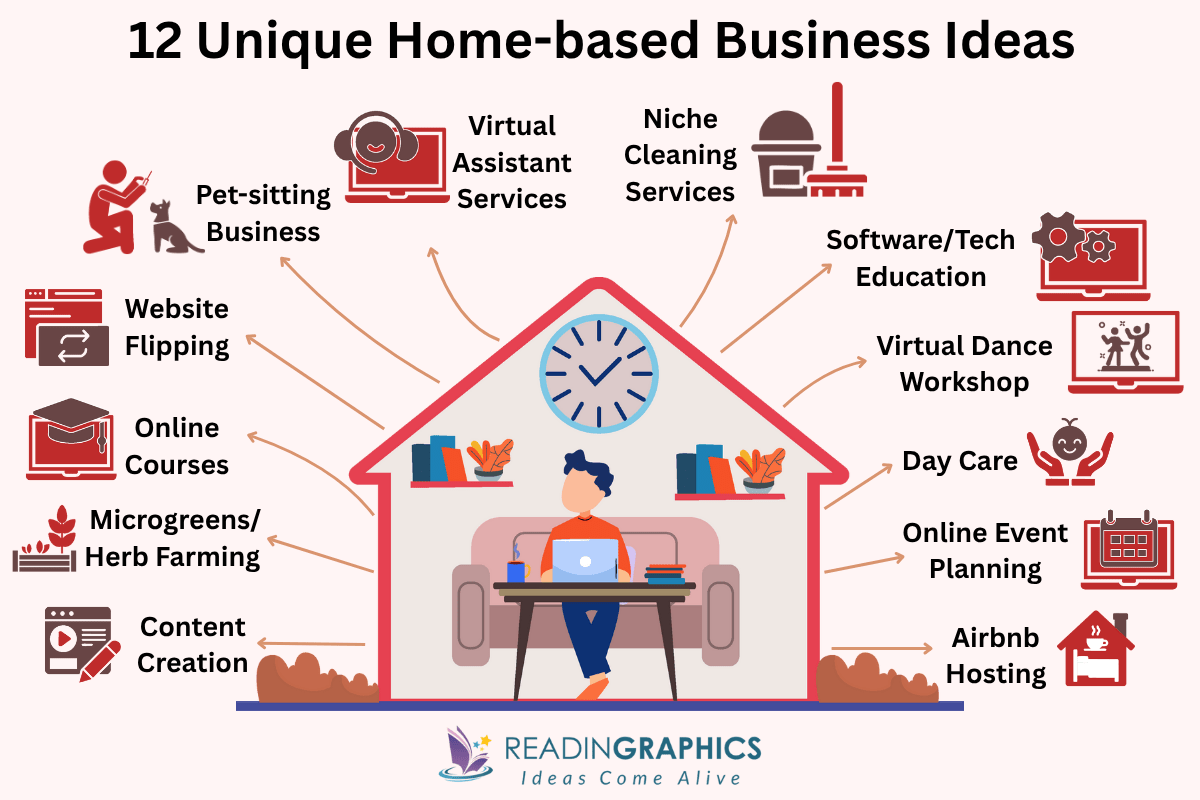
Many people consider home based business ideas to gain flexibility while building something on their own terms. Service-based options that use existing skills often have the lowest barriers because they require no inventory or physical product. Startup costs typically range from $500 to $10,000 depending on the type, and every home-based business must follow legal steps including registration, licensing, and zoning checks.
What Are Realistic Home Based Business Ideas?
Common categories include creative services such as copywriting, graphic design, and content creation; technology services like web design, app development, and digital marketing; e-commerce approaches such as selling handmade products, dropshipping, or using platforms like Etsy; and professional services including consulting, bookkeeping, and virtual assistance.
Service-based businesses that leverage skills a person already has rank among the easiest to start from home because they avoid the need for stock or dedicated equipment. Examples mentioned in guides include marketing or social media management, personal training or wellness coaching, selling handmade products via Etsy, operating a home-based bakery, and creating digital products such as templates.
These remain examples only. No specific idea is presented as better or guaranteed to succeed. Most home businesses take time to reach profitability and require realistic planning, consistent effort, and ongoing skill development.
How Much Does It Cost to Start a Home-Based Business?
Startup costs for home businesses typically range from $1,000 to $10,000 depending on the type and scaling plans. Costs fall into three tiers according to Xero US:
- Low-cost ($500-$2,000): skill-based or service businesses and digital products that mainly need a computer, internet connection, software subscriptions, and a business license.
- Medium-cost ($2,000-$5,000): e-commerce or creative services that may require inventory, equipment, or materials.
- Higher-cost ($5,000-$10,000+): regulated professions or light manufacturing that involve additional compliance or specialized tools.
Universal startup expenses include business registration ($50-$500), basic insurance ($200-$1,000 annually), accounting software ($10-$50 monthly), and initial marketing ($200-$1,000). These figures come from Xero US and represent typical ranges rather than fixed prices. Actual costs vary by location, industry, and whether the owner already owns necessary equipment.
Note that some trade or service businesses can carry significantly higher startup costs - sometimes $30,000 to $100,000 - when specialized equipment or vehicles are required. Readers should check sources specific to their chosen field.
What Legal Steps Are Required to Start a Business From Home?
Four main legal steps apply to most home-based businesses in the United States.
First, choose a business structure. A sole proprietorship offers no legal separation between personal and business assets, which means personal assets are at risk. An LLC provides legal separation and protects personal assets in most situations. Other options include partnerships and corporations. The US Chamber of Commerce outlines these distinctions.
Second, obtain an EIN (Employer Identification Number) if needed. This federal tax ID is free and can usually be secured within minutes directly on the IRS website.
Third, secure required licenses and permits. Most home-based businesses need at minimum a general business license that must be renewed annually. Certain fields require additional state professional licenses, particularly in healthcare, cosmetology, or other regulated areas.
Fourth, verify zoning and HOA compliance. Local zoning laws may restrict the number of employees, signage, square footage used for business activities, or customer visits. Homeowners association rules can impose further limits. These checks must be completed before operations begin.
The IRS provides an official Checklist for Starting a Business that covers EIN applications, state requirements, and industry-specific steps.
How Do You Launch a Home-Based Business?
A practical sequence includes these steps:
- Validate the idea by confirming demand and assessing whether the chosen service or product matches skills already possessed or can be developed without major additional expense.
- Register the business and complete all legal requirements listed above.
- Open a separate business bank account. This practice simplifies taxes and bookkeeping and is recommended by both the US Chamber of Commerce and Xero US.
- Set up a suitable workspace that meets zoning rules and supports the work without violating local restrictions.
- Handle basic marketing through low-cost channels such as a simple website, professional profiles on relevant platforms, or direct outreach. Initial marketing budgets often fall between $200 and $1,000.
Before committing money, readers should learn how to evaluate an online program if any training or course is involved. Related realistic options appear in Part Time Business Ideas: Realistic Options and Costs and How to Work for Yourself as a Beginner Freelancer.
The process demands time and careful attention to legal and financial details. No step replaces professional advice from accountants or attorneys for individual circumstances.
FAQ
What is the first step before choosing a home based business idea?
The first step is honest self-assessment of current skills, available time, and tolerance for upfront costs and slow initial progress. Guides from the US Chamber of Commerce and Xero US emphasize matching the idea to abilities that already exist rather than assuming new skills can be quickly mastered. This reduces both financial risk and the time needed to become operational.
Do all home-based businesses need a separate business bank account?
No law requires every home-based business to maintain a separate account. However, both the US Chamber of Commerce and Xero US strongly recommend one because it simplifies tax preparation, bookkeeping, and IRS record-keeping. Mixing personal and business transactions can create complications during audits or when claiming legitimate expenses.
How do you know if a home business idea fits local zoning laws?
Contact the local city or county planning department and ask specifically about home occupation permits, employee limits, signage rules, customer traffic, and square footage restrictions. Also review any HOA covenants if the property belongs to a homeowners association. These rules vary widely by location and must be confirmed in writing before launching operations. The US Chamber of Commerce lists this verification as a mandatory early step.