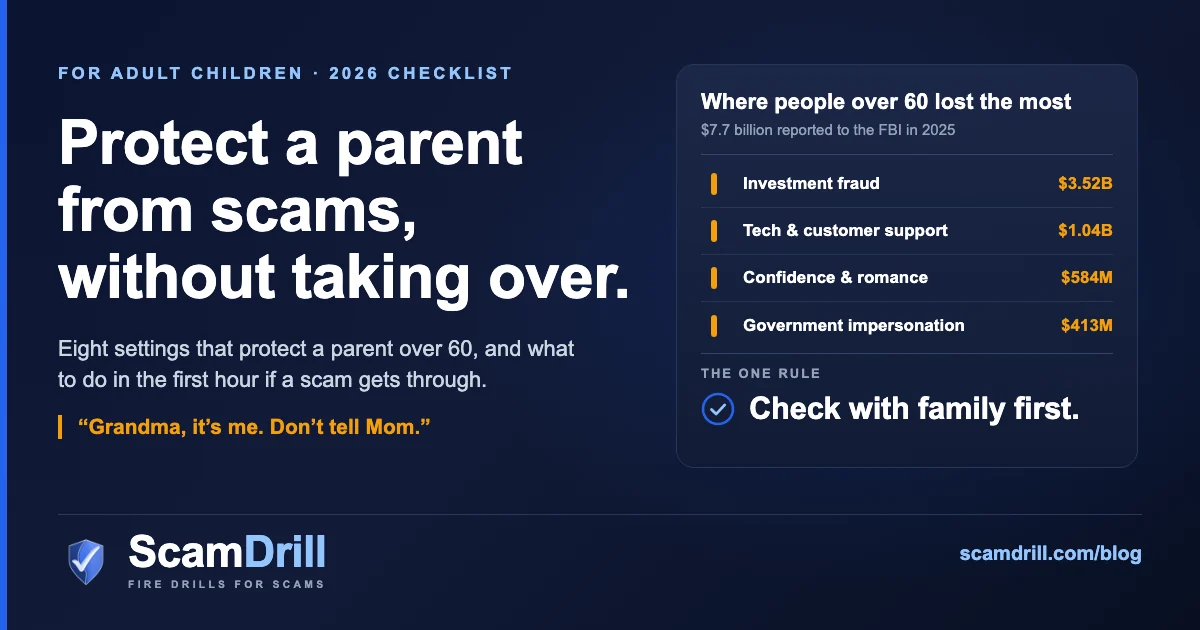
Adult children often feel helpless when an elderly parent continues sending money to scammers despite clear warnings. Recovery of funds is rare, so the focus must be on stopping further losses through quick documentation, official reporting, compassionate conversation, and stronger financial safeguards. This is general information only, not individual legal, financial, or medical advice.
Why Does This Keep Happening Despite Warnings?
When an aging parent keeps giving money to a scammer even after being told it is a scam, the situation involves complex emotional, psychological, and sometimes cognitive factors. Families frequently feel heartbroken, infuriated, and powerless, according to a clinical geropsychologist's discussion on the Center for Mental Health & Aging.
The framework of "dignity of risk" versus "duty of care" helps families understand the tension between respecting an older adult's autonomy and the need to protect them from harm. Cognitive decline may be involved and should be evaluated by a professional, though it is not something family members can diagnose themselves.
Leading with compassion instead of control or shaming produces better outcomes when responding. Scams against seniors are often not isolated incidents, which makes early intervention important.
How Should You Talk to Your Parent About the Scam?
Approach the conversation with empathy rather than accusation. The clinical geropsychologist recommends avoiding shame and control tactics, which can make the parent more defensive and less likely to accept help.
Focus on the shared goal of protecting their security and well-being. Acknowledge that scammers are skilled at building trust, and emphasize that many older adults become targets through no fault of their own. This topic connects to broader questions of how to tell if a job offer is a scam or what is a counterfeit check scam, as similar manipulation tactics appear across different fraud types.
How Do You Document the Details Quickly?
Record all available information while memory is still fresh. Write down the scammer's name or company, phone numbers, email addresses, websites, payment methods used, and any specific instructions the scammer gave.
This documentation step comes from practical guidance provided by a CPA firm that works with elder financial issues. Immediate records help when reporting to authorities and when contacting banks or legal services. Full recovery of funds sent to scammers is rare, so the primary goal of documentation is supporting official reports and preventing additional transfers.
How Do You Report the Scam?
The first recommended step is to contact the National Elder Fraud Hotline at 833-372-8311. This free U.S. Department of Justice resource serves people age 60 and older who are victims of elder fraud. It operates Monday through Friday, 10:00 a.m. to 6:00 p.m. ET, and offers support in English, Spanish, and other languages.
Case managers help with federal, state, and local reporting and can connect victims to additional resources. Reporting suspected fraud helps authorities stop fraudsters and protect others, according to the Office for Victims of Crime. Elder fraud and romance scams targeting older adults caused reported losses of more than $184 million in 2018, though many crimes go unreported due to shame, fear, or uncertainty about whom to call (FBI IC3 data cited via the Department of Justice).
Be aware that scammers have impersonated the National Elder Fraud Hotline itself, threatening lawsuits and asking for personal identifying information or more money. Never provide Social Security numbers or send additional funds in response to such calls.
After reporting to the hotline, contact the bank or financial institution involved. Also consider reaching out to legal services that specialize in elder issues. The National Elder Fraud Hotline page provides further details on this process.
What Can Reduce the Risk of It Happening Again?
Scams against seniors are rarely one-time events. Review bank accounts, insurance policies, investments, annuities, property titles, wills, trusts, and powers of attorney for any unauthorized recent changes.
Several options exist for increasing oversight of finances. These include professional fiduciary or trustee services, daily money management programs, conservatorship (where appropriate), trusts, or granting power of attorney to a trusted person. These are presented as available tools only; each situation requires professional evaluation to determine suitability.
Evaluating future opportunities carefully remains important. Understanding how to evaluate an online program can help both adult children and older adults spot warning signs before money changes hands. Articles on at-home jobs for retirees and best at-home jobs for seniors with no experience also highlight realistic income options while flagging common scams that target this age group.
FAQ
What should I do first if my parent is being scammed?
Document every detail you can while the information is fresh, including names, contact information, payment methods, and instructions received. Then report the situation to the National Elder Fraud Hotline at 833-372-8311 as soon as possible. Focus on stopping further losses rather than expecting full recovery, which is rare. This is general information, not personalized advice.
Is full recovery of the money likely?
Sources indicate that full recovery of funds sent to scammers is rare. The emphasis from both government resources and professional guidance is on halting additional payments, documenting what occurred, and reporting to authorities so they can pursue the perpetrators. Individual outcomes depend on many factors outside the scope of this article.
How can I talk to my parent without causing shame?
Lead with compassion and avoid control tactics or shaming language, according to clinical geropsychologist guidance from the Center for Mental Health & Aging. Acknowledge the skill of scammers, frame the discussion around shared concern for their security, and respect the "dignity of risk" concept while exploring protective options. Cognitive changes may also play a role and warrant professional assessment.
What options exist for protecting my parent's finances going forward?
Review all financial accounts and legal documents for unauthorized changes. Professional fiduciary services, daily money management, conservatorship, trusts, or power of attorney arrangements are among the tools that can provide additional oversight. Each option has different requirements and should be evaluated with qualified professionals. Reporting through the National Elder Fraud Hotline can also connect families to further resources.
Why is reporting to the National Elder Fraud Hotline important?
Reporting helps authorities track and stop fraudsters, which can protect other potential victims. The hotline provides case managers who assist with reports across multiple government levels and link callers to support services. The Department of Justice notes that many elder fraud cases go unreported, limiting law enforcement's ability to respond effectively.