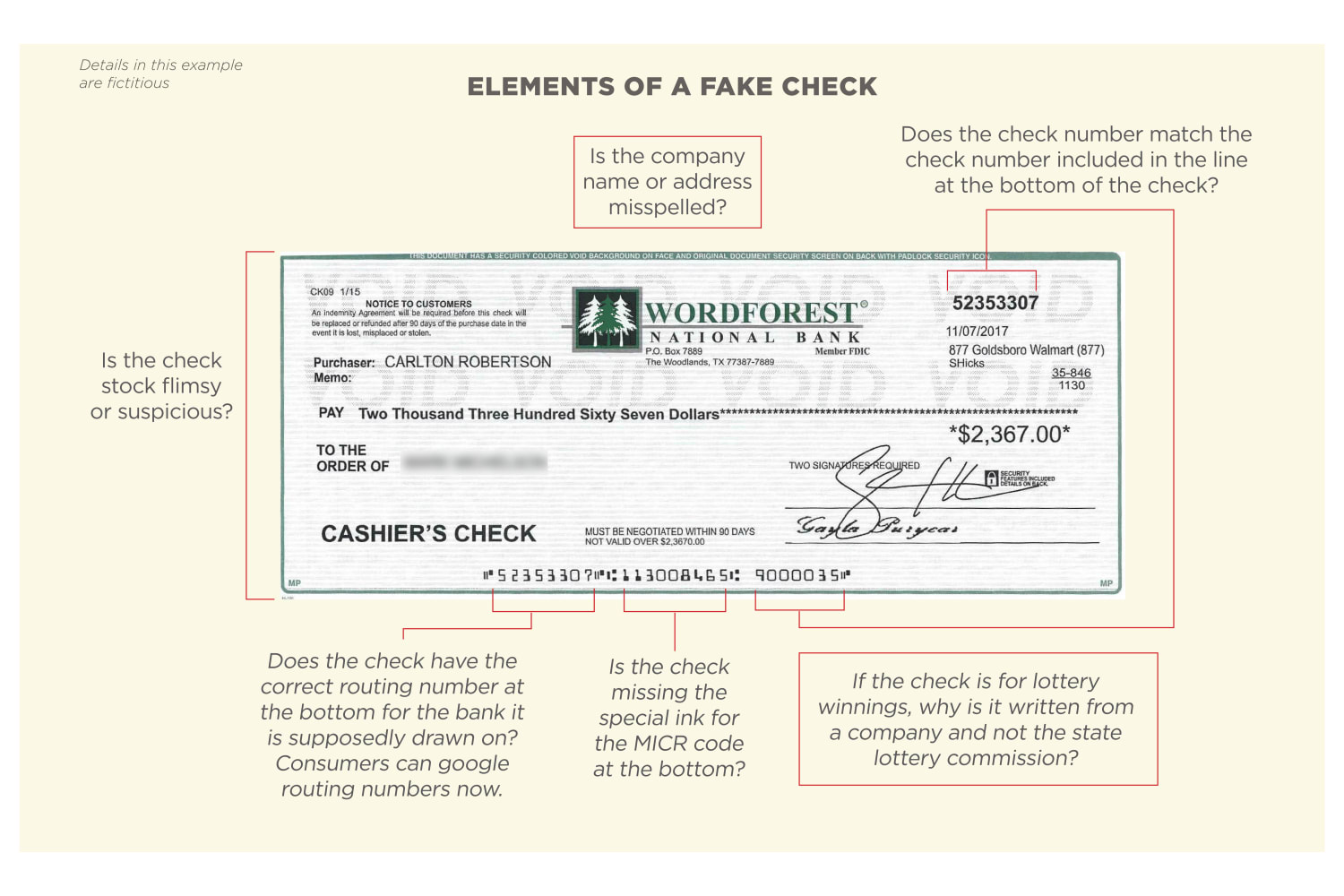
A counterfeit check scam occurs when fraudsters send a fake check or money order for more than the amount owed, ask the recipient to deposit it and wire the excess back, then disappear once the check bounces. The victim is left owing the bank the full amount withdrawn. Fake checks remain one of the most common instruments used to commit fraud against consumers, according to the American Bankers Association (ABA).
This article explains exactly how counterfeit check scams operate, the critical fact that "cleared" funds offer no protection, red flags to watch for, safe verification steps, and what to do if you receive a suspicious check.
How Does the Counterfeit Check Scam Work?
The scam typically begins when someone offers to buy an item you advertised, promises an "advance" on a sweepstakes or prize, or pays a first installment for a money-transfer job. They send a check or money order for more than the agreed amount and instruct you to deposit it, keep your portion, and wire the difference back before their funds "clear."
Common variations include secret shopper scams, where the victim receives a money order to deposit as "payment" and is told to buy gift cards with part of the money, and altered Western Union money orders sold at a discount through social media.
Scammers use sophisticated software, commercial laser printers, scanners, and blank check stock to create counterfeit checks that look like legitimate ones. These can include counterfeit money orders, phony cashier's checks, or fakes drawn on real business accounts, according to both the ABA and the United States Postal Inspection Service (USPIS).
In every version, the check eventually bounces. Because banks must make funds available quickly under federal law, the money may appear in your account and seem spendable. When the fraud is discovered weeks later, the bank reverses the deposit and holds you responsible for the loss.
Why "Cleared" Funds Can Still Disappear Weeks Later
Even if the bank tells you the check has cleared and the funds are available to withdraw, the check may still be counterfeit. Federal rules require banks to make deposited funds available on a set schedule, but this availability does not mean the check is valid or that the paying bank has truly honored it.
Fake checks can take weeks to be discovered. By the time the issuing bank or clearing process identifies the forgery, you may have already wired money, spent the "extra," or sent gift cards. The bank does not absorb the loss; the account holder who deposited the counterfeit item is required to repay the full amount.
The USPIS and ABA both emphasize this point: never assume that fast fund availability equals a legitimate check.
Red Flags That Signal a Counterfeit Check
There is no legitimate reason for someone to give you money and then ask you to wire any portion of it back or send more than the exact amount owed. The ABA lists this as a clear warning sign.
Other red flags include:
- Receiving a check for significantly more than the agreed price or debt
- Pressure to act quickly before the check "clears"
- Requests to wire money via Western Union, MoneyGram, or similar services
- Offers tied to secret shopper assignments, prize winnings, or remote check-processing jobs
- Money orders or checks received from people you have not met in person
Any of these situations should raise immediate suspicion.
How to Verify a Check or Money Order Safely
If you receive a check or money order from someone you do not know, the safest step is not to deposit it at all. The ABA and credit union consumer guidance recommend preferring cash, electronic transfers such as PayPal or Venmo, or verified prepaid cards when possible.
When verification is necessary:
- Call the number printed on the check or money order to confirm funds, but also look up the bank's official customer service number separately and call that number instead. Do not rely solely on contact details provided on the document.
- Confirm that the routing number matches the bank name.
- Examine physical security features: watermarks, microprinting, holograms, color-shifting ink, perforated edges, and magnetic MICR ink that does not smear when touched with a moist finger. Check numbers should be consistent and fields properly aligned.
These steps come from verification guidance aligned with ABA and USPIS warnings. Even with careful inspection, the only guaranteed protection is refusing unknown checks entirely.
What to Do If You Receive a Suspicious Check
Do not deposit the check or spend any funds from it. Contact your bank immediately to report the suspicious item. If you have already deposited it and sent money, notify the bank right away; the sooner you report, the better your chances of limiting damage.
Report the suspected fraud to the Federal Trade Commission at ReportFraud.ftc.gov and to the Better Business Bureau Scam Tracker. If the item arrived by mail, the United States Postal Inspection Service also handles check fraud complaints.
For more on spotting fraudulent opportunities that often accompany these scams, see how to tell if a job offer is a scam or how to know if a job is a scam. Before engaging with any unfamiliar online offer, review how to evaluate an online program.
FAQ
What is a counterfeit check scam?
A counterfeit check scam happens when someone sends you a fake check or money order for more than the amount you are owed and asks you to send the excess back by wire or other irreversible methods. When the check is later identified as counterfeit, the bank removes the funds from your account and you owe the full amount. The American Bankers Association identifies fake checks as one of the most common fraud methods targeting consumers.
Can a check clear and still be fake?
Yes. Banks are required by federal law to make funds available on a specific schedule. This availability does not mean the check is legitimate or that the paying bank has verified it. Counterfeit checks can take weeks to be discovered, at which point the deposit is reversed and the depositor is held responsible, according to the ABA and the United States Postal Inspection Service.
Is there ever a legitimate reason to wire money back from a check?
No. The American Bankers Association states there is no legitimate reason for someone to give you money and then ask you to wire any of it back or send more than the exact amount. This request is a major red flag that the check is counterfeit and the sender intends to steal funds from your account.
What should I do if I already deposited a suspicious check?
Contact your bank immediately and report the item. Do not spend any of the funds. The faster you notify the bank, the more likely they can limit the loss. Also file reports with the FTC and BBB Scam Tracker. If money was already wired, recovery is unlikely.
How can I avoid counterfeit check scams?
Never deposit a check or money order from someone you do not know. Prefer cash, electronic transfers through trusted apps, or verified prepaid cards. Verify any check by calling the issuing bank's official number (not the one printed on the check) and inspecting security features. When an offer involves overpayment and a request to send money back, treat it as a scam.